
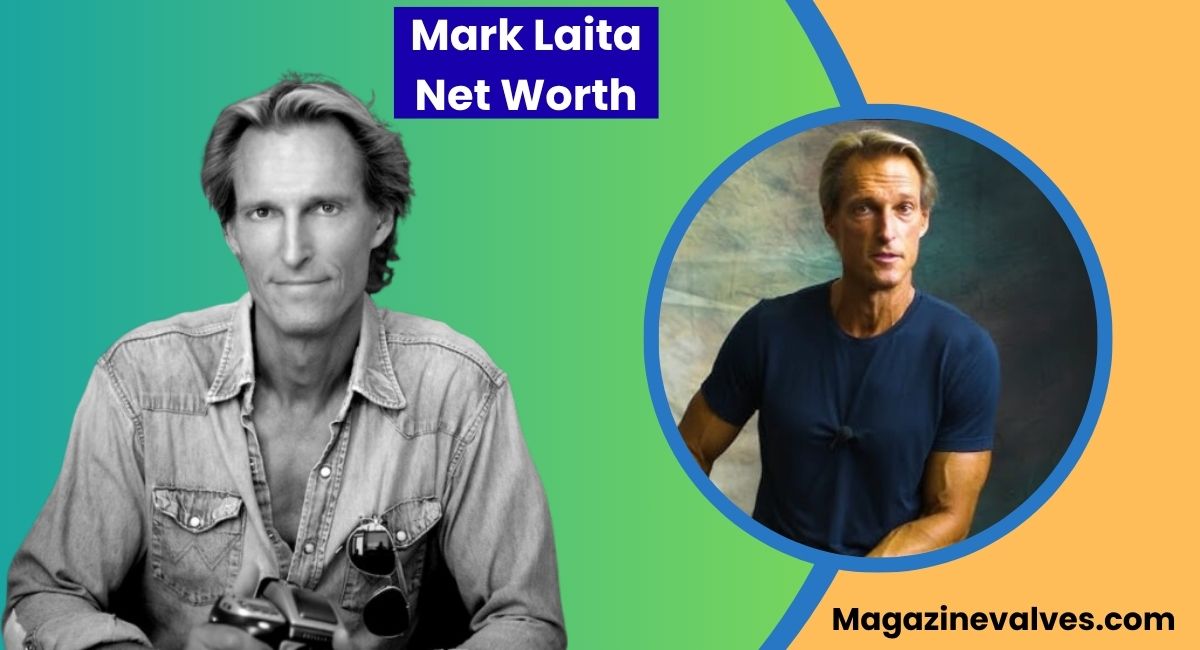
Mark Laita Net Worth has become a widely searched topic as people explore the financial journey of the photographer and creator behind Soft White Underbelly. Unlike many internet personalities who rise through short-term trends, Mark built his success through decades of dedication in photography, publishing, and digital storytelling.
His estimated wealth comes from multiple income channels, including YouTube revenue, commercial photography, fine-art print sales, book royalties, and memberships. From working with major global brands to producing thought-provoking documentary content, Mark Laita has created a unique career path. His story reflects long-term growth, creative passion, and a smart approach to building sustainable financial success.
Mark Laita Net Worth 2026 Overview
Mark Laita’s financial success in 2026 is the result of decades of disciplined work. His Mark Laita net worth 2026 estimate of $4M–$6M reflects multiple thriving income streams working simultaneously. Unlike many creators who rely on a single platform, Laita built a financial diversification model that most YouTubers only dream about. His Mark Laita revenue streams include YouTube ads, channel memberships, fine-art print sales, book publishing royalties, photography licensing, and residual income from global brand campaigns he shot years ago.
What makes his Mark Laita financial portfolio genuinely impressive is the balance between active and passive income. Every day that passes, his archive of commercial photography quietly generates legacy licensing agreements income. Meanwhile, Soft White Underbelly pumps out new content that drives fresh ad revenue and membership subscriptions. That combination of old-money licensing and new-media digital monetization is the backbone of his financial stability.
| Income Source | Estimated Annual Earnings |
|---|---|
| YouTube Ad Revenue | $500,000 – $1,000,000+ |
| Channel Memberships | $200,000 – $400,000 |
| Sponsorships | $100,000 – $300,000 |
| Fine Art Print Sales | $50,000 – $150,000 |
| Book Royalties | $20,000 – $60,000 |
| Photography Licensing | $50,000 – $100,000 |
| Total Estimated | $920,000 – $2,000,000+/year |
Mark Laita Quick Bio and Personal Details
Before diving into the dollars, it helps to understand who Mark Laita actually is. He isn’t a celebrity who stumbled into YouTube fame. He’s a deeply intentional artist whose every career move has been guided by a consistent obsession — capturing the raw truth of human existence. His Mark Laita biography reads like two separate lives stitched together: first the polished world of premium commercial campaigns, then the unfiltered gutters of American society. Both worlds shaped his identity and his bank account equally.
Also read: Kim Gravel Net Worth 2026
Mark Laita’s profession straddles multiple worlds at once. He’s an advertising photographer, a documentary creator, a published author, and a digital media platform builder. Not many people successfully operate across all four. Understanding that complexity helps explain why his Mark Laita income is so much harder to pin down than a typical YouTuber’s paycheck.
Mark Laita Profile
| Detail | Information |
|---|---|
| Full Name | Mark Laita |
| Profession | Photographer, YouTuber, Author |
| Nationality | American |
| Known For | Soft White Underbelly, Commercial Photography |
| Estimated Net Worth (2026) | $4M – $6M |
| YouTube Subscribers | 7M+ |
| Based In | Los Angeles, California |
| Books Published | Created Equal, Serpentine |
Age, Height, Nationality & Background
Mark Laita was born in 1960, making him 65 years old in 2026. His Mark Laita nationality is American. He was raised in the Midwest, far from the glittering chaos of Los Angeles where he would eventually build his career. Standing at approximately 5’10”, he carries himself with the quiet confidence of someone who has spent decades behind a camera rather than in front of one. His Mark Laita age in 2026 actually adds to his credibility — he isn’t a young hustle-culture creator chasing trends. He’s a seasoned professional whose work carries real weight.
His Midwestern upbringing planted seeds that would blossom much later. Growing up surrounded by working-class Americans gave him an eye for ordinary people. It gave him empathy that no photography school can teach. That background eventually became the philosophical foundation for Soft White Underbelly — a channel built entirely on the belief that every human being deserves to be seen and heard, regardless of their circumstances.
Family Information
Mark Laita keeps his family life deliberately private. He has never been the type to parade his personal world in front of cameras. What is publicly known is that he is a devoted family man. His wife and daughters have occasionally been referenced in interviews but remain largely shielded from his public platform. That privacy is intentional. For a man who films some of the most vulnerable people in America, protecting his own family makes complete sense.
His Mark Laita family dynamic appears to be a grounding force in his life. The emotional weight of filming Skid Row interviews and documenting addiction, trauma, and despair requires somewhere safe to return to. His home and family clearly provide that sanctuary. It’s a balance that keeps his work sustainable — and his mental health intact.
Early Life and Education of Mark Laita
Great photographers are rarely born in photography studios. They’re shaped by what they see growing up. Mark Laita’s early life in the American Midwest gave him a lens — both literally and figuratively — that would define his entire career. As a young man, he was drawn to visual art with an intensity that set him apart from his peers. He noticed light differently. He saw composition in ordinary moments. That innate visual intelligence was the raw material that education and experience would eventually refine into world-class skill.
His educational background reflects a commitment to craft. Laita pursued formal training in photography and visual arts, developing technical skills that would later command fees most photographers never see. But his education wasn’t limited to classrooms. Los Angeles itself became his second school. The city’s brutal contrasts — wealth beside poverty, glamour beside desperation — fed directly into his artistic worldview. By the time he started landing premium commercial campaigns, he already understood something crucial: the most powerful images are always about people, never just products.
The move from the Midwest to Los Angeles was a defining leap of faith. Many young artists make that move and fold under the pressure. Laita didn’t. He arrived with a discipline and work ethic that the industry quickly noticed. He wasn’t chasing celebrity. He was chasing craft. That distinction matters enormously. It explains why his Mark Laita career has staying power that most creative professionals never achieve — because it was never built on trends. It was built on skill.
How Mark Laita Started His Photography Career
Los Angeles in the 1980s and 1990s was a competitive arena for visual artists. Advertising agencies were spending enormous budgets on photography. Brands wanted images that stopped people cold. Laita fit that world perfectly. His style was immediately distinctive: clean, high-contrast, subject-focused compositions that stripped away visual noise and forced viewers to confront what was actually in the frame. That approach made him extraordinarily valuable to clients who needed their products to command attention.
His Mark Laita photography career gained serious traction through persistence and referrals. In the competitive world of commercial photography, reputation is everything. One successful campaign leads to the next. One satisfied client becomes three. Laita built his network methodically, delivering work that exceeded briefs consistently. His photography studio became known for a specific kind of visual power — the kind that made art directors feel confident before the shoot even started. That confidence translates directly into bookings and fees.
What separated Laita from other technically skilled photographers was his ability to connect with subjects. Whether that subject was a product, an animal, or a human being, he had an instinct for finding the angle that revealed something true. That skill sounds simple. In practice, it’s extraordinarily rare. It became the thread that connects his commercial work to Soft White Underbelly — different contexts, same fundamental gift for visual storytelling.
Commercial Photography and Major Brand Collaborations
When the world’s largest companies need images that sell — genuinely sell — they hire photographers who have proven they can deliver at the highest level. Mark Laita earned that reputation. His client list reads like a roll call of American corporate power: Nike, Samsung, Pepsi, Google, and dozens of other household names trusted him with their most important visual campaigns. Each of those partnerships represents not just creative work but significant Mark Laita earnings that funded both his lifestyle and his personal artistic projects.
The economics of commercial photography at Laita’s level are eye-opening. A single campaign for a major brand can generate anywhere from $50,000 to several hundred thousand dollars for the photographer. Factor in usage rights, licensing fees, and repeat business, and a top-tier advertising photographer like Laita could earn well over a million dollars in a strong year from commercial work alone. His Mark Laita salary equivalent during his peak commercial years was genuinely substantial — the kind of income that creates long-term financial security and funds independent creative work without compromise.
Beyond the paychecks, his commercial work produced two things that money can’t buy directly: credibility and freedom. Credibility because the brands he worked for validated his technical mastery to the entire industry. Freedom because financial security allowed him to pursue passion projects — including the fine-art photography books that cemented his status as a serious artist, not just a hired gun.
Notable Published Works by Mark Laita:
- Created Equal (2014) — A striking visual exploration of the American experience across race, class, and circumstance
- Serpentine (2020) — A breathtaking collection of snake photography that became a critical and commercial success
- Various editorial and gallery works exhibited internationally
| Publication | Year | Subject | Cultural Impact |
|---|---|---|---|
| Created Equal | 2014 | Human diversity in America | Widely exhibited, critically acclaimed |
| Serpentine | 2020 | Fine-art snake photography | Gallery shows, strong collector demand |
Soft White Underbelly and Its Impact on Mark Laita Net Worth
Nobody predicted that a fine-art photography legend would build a 7-million-subscriber YouTube empire. Mark Laita did exactly that. Soft White Underbelly transformed his financial trajectory entirely. Before the channel, his wealth came from commercial clients and art collectors — a relatively small, elite audience. After the channel, millions of ordinary Americans discovered him weekly. That audience expansion multiplied his Mark Laita income in ways that no single commercial campaign ever could.
The impact of Soft White Underbelly on Mark Laita’s net worth in 2026 is profound and multidimensional. It didn’t just add a YouTube income stream. It amplified every other stream simultaneously. More people discovering Laita through YouTube means more book sales, more print purchases, and more demand for his broader body of work. The channel functions as both a revenue engine and a content monetization megaphone for everything else he does.
What Is Soft White Underbelly?
Soft White Underbelly is a YouTube channel built on a deceptively simple premise. Laita sits across from people that mainstream society has written off. Addicts, sex workers, homeless individuals, gang members, trauma survivors, people with severe mental illness — he gives them a chair, a camera, and his full, undivided attention. The visual style is deliberately stripped down: a plain background, direct lighting, no fancy production. Just a person and their story.
The name itself is revealing. A “soft white underbelly” refers to the most vulnerable, unprotected part of an organism. Laita uses that metaphor to describe the people he interviews — the unprotected, often invisible Americans whose stories mainstream media consistently ignores. His documentary journalism approach is part therapy session, part social issues documentary, and part confession booth. The result is content that feels unlike anything else on YouTube. Launched in 2016, the channel grew slowly at first before exploding into cultural consciousness as audiences hungry for authentic human storytelling found it and couldn’t stop watching.
Why the Channel Became Popular
Soft White Underbelly became popular because it offers something increasingly rare on the internet: genuine, unscripted human truth. While most creators were chasing algorithm trends with polished thumbnails and rehearsed scripts, Laita was sitting in a bare room with a recovering meth addict from Skid Row interviews, asking quiet questions and letting the silence do its work. That contrast with the noise of mainstream YouTube created a powerful gravitational pull.
The channel also succeeded because of Laita’s background as a humanistic documentarian. He doesn’t approach his subjects with judgment. He doesn’t approach them with pity either. He approaches them with the same focused, empathetic attention he’d give a subject in a photography studio — as if this person is worth seeing clearly and completely. Audiences feel that intention. It’s why comment sections under his videos often overflow with gratitude, reflection, and personal confessions from viewers who recognized their own family members — or themselves — in the people on screen.
Growth and Financial Success
The numbers behind Soft White Underbelly’s growth tell a compelling story of digital media platform success. From a modest start in 2016, the channel crossed 1 million subscribers by around 2019. Then it accelerated sharply. By 2023, it had crossed 6 million. In 2026, it sits comfortably above 7 million subscribers with hundreds of millions of total video views.
YouTube AdSense revenue at that scale is significant. Documentary-style content typically earns higher CPM (cost per thousand views) rates than entertainment content because its audience skews older and more engaged — exactly the demographic advertisers pay premium rates to reach. Combined with a thriving audience memberships program where paying members access exclusive content, the channel’s recurring revenue is remarkably stable. That stability is the engine driving the upward trajectory of Mark Laita’s Mark Laita annual earnings since 2019.
| Year | Estimated Subscribers | Key Milestone |
|---|---|---|
| 2016 | < 10,000 | Channel launch |
| 2019 | ~1,000,000 | First major viral interviews |
| 2021 | ~3,000,000 | Mainstream media coverage begins |
| 2023 | ~6,000,000 | Top documentary channel status |
| 2026 | 7,000,000+ | Established cultural institution |
Mark Laita Income Sources Explained
Mark Laita’s earnings don’t flow from one tap. They flow from six. That financial diversification is precisely why his wealth is so durable. A single income source can collapse overnight — ask any creator who got demonetized or lost a major client. Laita’s Mark Laita financial portfolio is structured in a way that makes him genuinely resistant to that kind of shock. Lose one stream and five others keep flowing.
Understanding his Mark Laita revenue streams in detail reveals a creative entrepreneurship model worth studying. He didn’t stumble into this diversification. He built it deliberately over decades — adding each new income layer as his career expanded. The result in 2026 is a financial architecture that generates income while he sleeps, while he’s on set, and while new viewers discover his work for the first time.
YouTube Revenue
YouTube AdSense revenue is the most visible part of Laita’s income. Channels at his size and engagement level earn between $3 and $8 CPM on average for documentary content — sometimes higher during strong advertising seasons like Q4. With hundreds of millions of total views and consistent new uploads, his Mark Laita YouTube income is estimated at $500,000 to over $1 million annually when ad revenue is strong.
The nuance here is that Soft White Underbelly has faced periodic demonetization on specific videos due to their sensitive subject matter. Laita has been transparent about this publicly. It’s one reason why Patreon memberships and YouTube’s own membership program became so important to his business model — they provide income that advertising restrictions can’t touch. Smart content monetization means never putting all your eggs in one algorithmic basket.
Sponsorships & Memberships
Patreon memberships and YouTube channel memberships represent some of the most reliable recurring revenue in Laita’s financial structure. His paying audience is deeply loyal. These aren’t casual viewers who drift in and out. They’re committed supporters who pay monthly specifically to access exclusive content and support his work directly. Conservative estimates suggest between 15,000 and 30,000 paying members at average rates of $5–$15 per month — generating roughly $200,000 to $400,000 annually from memberships alone.
Sponsorships are handled carefully given the sensitive nature of his content. Not every brand wants its name attached to interviews about heroin addiction. However, select sponsors in categories like education, mental health apps, and community-focused services have partnered with the channel. These deals, when they happen, command significant premiums precisely because Soft White Underbelly’s audience is so intensely engaged — a metric every smart advertiser values above raw subscriber counts.
Book Sales Royalties
Book publishing royalties from Created Equal and Serpentine represent a quieter but meaningful part of Laita’s income picture. Both books found strong audiences. Created Equal in particular struck a cultural nerve with its unflinching portrait of American diversity, earning it placement in galleries, schools, and serious photography collections worldwide. Serpentine carved out a dedicated following among nature photography enthusiasts and fine-art photography collectors.
Book publishing royalties in the photography book space typically range from 8% to 15% of cover price. For a premium photography book priced at $60–$80, that translates to $5–$12 per copy sold. Multiply that across thousands of annual sales and a growing back catalog and the passive income picture becomes clear. These books also function as long-term assets — they don’t expire and they keep selling as new fans discover Laita through his YouTube channel every day.
Fine Art Print Sales
Fine-art print sales are where Laita’s commercial photography background meets serious collector money. Limited edition prints from photographers of his caliber don’t sell for poster prices. They sell for hundreds to thousands of dollars per piece. A signed, limited-run print from his Serpentine series or his Created Equal project can command anywhere from $500 to $5,000 depending on size, edition, and demand. Museum-quality prints from established photographers appreciate in value over time — making them attractive both to buyers who love them and investors who want them.
His artistic portfolio spans decades of world-class work. That depth of material means his print business has genuine breadth. He isn’t limited to ten images. He has an archive of thousands of compelling photographs from commercial shoots, personal projects, and documentary work. Each image represents a potential fine-art print sales opportunity. Conservatively, this stream generates $50,000 to $150,000 annually — and it scales quietly in the background regardless of what else he’s working on.
Photography Licensing
Photography licensing is the most passive and arguably most durable part of Laita’s income. Every commercial image he has ever created exists as a potential licensing asset. Advertising agencies, editorial publications, digital platforms, and international brands regularly license existing photography rather than commissioning new shoots — it’s faster and often cheaper. For a photographer with Laita’s archive of global brand campaigns, legacy licensing agreements generate steady income year after year with zero additional creative effort required.
Photography licensing fees vary enormously. A single editorial license might generate $500. A commercial license for a major brand campaign could generate $25,000 or more. Laita’s archive likely generates multiple licensing transactions monthly. Estimated annual income from this stream alone sits at $50,000 to $100,000 — not flashy, but remarkably reliable. It’s the financial equivalent of owning real estate: the asset works for you whether you’re on set or on vacation.
Mark Laita Wife, Daughter and Family Life

Behind the camera sits a very private man. Mark Laita’s Mark Laita wife and Mark Laita daughters are shielded carefully from his public profile — a deliberate choice that says something meaningful about his character. In an era when many creators monetize every corner of their personal lives, Laita draws a firm line. His family exists outside the frame. That boundary is respected. His wife has been referenced in interviews as a supportive partner who understands the emotional demands of his documentary work, but she remains unnamed publicly by choice.
His Mark Laita family appears to be a deeply stabilizing force. Consider what his working life involves — regular, intense conversations with people experiencing the worst moments of their lives. Addiction, abuse, homelessness, mental illness — Laita absorbs those stories professionally and personally. Without a stable, loving home environment, that kind of work would be psychologically devastating over time. His family gives him the grounding that makes his documentary work sustainable. It’s not just a personal detail. It’s structurally important to understanding how he has sustained this work for years without burning out.
His daughters, while kept private, have reportedly been a source of perspective for Laita when interviewing young women in crisis on his channel. The humanity he shows toward vulnerable young people on screen reflects — at least in part — the love of a father who sees his own children’s vulnerability reflected in theirs. That empathetic connection isn’t manufactured. It’s real. And audiences feel it in every interview he conducts.
Controversies, Criticism and Public Debate
Nobody films the underbelly of America without catching heat. Mark Laita’s work has generated serious public debate since Soft White Underbelly went mainstream. The central ethical concerns raised by critics are legitimate and worth engaging honestly. The most common charge is exploitation: that Laita profits financially from filming deeply vulnerable people — addicts, sex workers, homeless individuals — who may not fully understand how their interviews will be used or how widely they’ll be seen. Critics argue that no matter how empathetically the interviews are conducted, the fundamental power imbalance between filmmaker and subject raises uncomfortable questions.
Laita has addressed these criticisms directly in multiple interviews. His position is that documentary journalism has always existed in tension with its subjects. He argues that invisibility is itself a form of harm — that the people he films are far worse off being ignored by society than being seen by millions. He has also described providing financial help, housing referrals, and rehabilitation resources to some subjects outside of filming. Whether that fully resolves the ethical concerns is a matter of genuine debate. Reasonable people land on different sides of it.
The channel has also faced platform-level challenges. YouTube AdSense revenue restrictions on sensitive content have intermittently demonetized specific interviews — a practical consequence of covering subjects that advertiser-friendly algorithms struggle to categorize. Additionally, some mental health advocates have questioned whether certain interviews could be harmful to subjects still in active addiction or crisis. These are not trivial concerns. They are the kinds of questions that anyone engaging seriously with documentary journalism should grapple with honestly.
The famous snake bite incident deserves a mention here too. During a photoshoot for his Serpentine project, Laita was bitten by a black mamba — one of the world’s most venomous snakes. He survived after emergency treatment. The incident became widely discussed and added an unexpected layer to his public persona: a man willing to put himself in physical danger for his art, long before he was sitting across from people in spiritual and psychological danger on Soft White Underbelly.
Lifestyle, Assets and Financial Habits
So how does a man worth millions actually live? Mark Laita’s Mark Laita lifestyle is notably understated for someone at his income level. Based in Los Angeles — one of the most expensive cities in America — he operates with the mindset of a craftsman rather than a celebrity. There are no tabloid stories about luxury jets or extravagant parties. His public presence reflects someone who reinvests in his work rather than his image. His Mark Laita assets appear to be concentrated in real estate in the Los Angeles area, professional equipment, and his growing archive of fine-art photography — all of which represent genuine long-term value.
His professional equipment investment alone is substantial. A world-class photography studio setup including cameras, lighting systems, grip equipment, and post-production technology can easily represent $100,000 to $500,000 in Mark Laita assets. For a working commercial photographer and documentary filmmaker, that investment is both necessary and financially justifiable. It’s the infrastructure that generates income — not a vanity purchase. His business model rewards investing in quality tools because quality tools produce work that commands premium fees and legacy licensing agreements for decades.
Financially, Laita’s habits reflect a man who understands long-term assets over short-term displays of wealth. He has spent thirty-plus years building an archive, a reputation, and a platform that generate value independently of his daily effort. That’s not accidental. It reflects a philosophy: creative freedom requires financial stability, and financial stability requires building things that last. His Mark Laita financial portfolio is structured for durability — diversified income, owned assets, passive revenue streams — rather than the volatile boom-and-bust cycles that define many creative careers.
Final Thoughts on Mark Laita Net Worth
Here’s what the numbers actually tell us about this man. Mark Laita’s net worth in 2026 — estimated at $4 million to $6 million — is the product of thirty-plus years of disciplined creative work across two distinct careers. He didn’t inherit it. He didn’t stumble into it. He built it image by image, interview by interview, with a consistency of vision that’s genuinely rare in any industry.
His Mark Laita financial success story is instructive for anyone in the creative economy. He built his foundation in commercial photography before pivoting to cultural documentary content on YouTube. Each phase funded and informed the next. His digital monetization through Soft White Underbelly didn’t replace his earlier income streams — it amplified them. That layered, patient approach to building wealth through creative entrepreneurship is a masterclass in how artists can achieve financial security without sacrificing the integrity of their work.
What makes Mark Laita genuinely interesting isn’t the dollar figure. It’s that his wealth is a byproduct of work he would likely do regardless of the money. Soft White Underbelly exists because he felt compelled to make it — not because a business plan told him to. Created Equal exists because he had something to say about America. His fine-art photography books exist because beauty and truth demanded documentation. The money followed the work. Not the other way around.
“Mark Laita’s net worth in 2026 reflects two careers built on one consistent obsession: the truth.”
His legacy won’t ultimately be measured in dollars. It’ll be measured in the millions of Americans who watched a Soft White Underbelly interview and looked at their homeless neighbor — or their addicted sibling — just a little differently. That’s the kind of return on investment that no balance sheet can calculate.
What do you think? Is Soft White Underbelly genuinely changing how Americans see poverty and addiction — or does it raise ethical questions that can’t be ignored? Drop your thoughts in the comments below.
FAQs
What is Mark Laita net worth in 2026?
Mark Laita’s net worth in 2026 is estimated to be between $2.5 million and $5 million. His wealth comes from decades of commercial photography success and his ongoing digital content creation. He also earns from book royalties, fine-art prints, and YouTube monetization.
How does Mark Laita make money?
He earns money through multiple streams including YouTube AdSense, Patreon memberships, commercial photography licensing, fine-art print sales, and book publishing royalties. His diversified income model helps maintain long-term financial stability.
Who is Mark Laita’s wife?
Mark Laita is divorced and keeps his personal life very private. He has daughters, but he does not publicly share detailed information about his ex-wife or family relationships.
How old is Mark Laita?
Mark Laita was born in 1960, making him around 65–66 years old in 2026. Despite his age, he remains active in producing content and managing his photography work.
Why is Soft White Underbelly so popular?
Soft White Underbelly is popular because it features raw, emotional interviews with people from marginalized communities. Its honest storytelling style and human-focused approach make it deeply engaging for global audiences.